
Moab history beyond the canyon views
Moab history gives another perspective on a place often approached through its scenery. The town in southeastern Utah is a base for Arches, Canyonlands, Dead Horse Point and the Colorado River, but its development also involved farming, ranching, public services and mining. Looking at those strands together makes a visit more interesting than treating the town simply as the space between park entrances.
A useful starting point is the sequence of early infrastructure: telephone and water services, the arrival of an automobile, a bridge across the Colorado and electrification. Later, uranium brought a different scale of change. The creation of Canyonlands and the closure of the uranium mill belong to the same broader account of a town whose relationship with the surrounding landscape has changed.
Use this chronology alongside the sights and activities overview. It provides context for a landscape visit rather than a route between historic buildings. For an outing with a guide, the private tour comparison explains the available landscape experiences and their different arrangements.
Town services and the Colorado River bridge
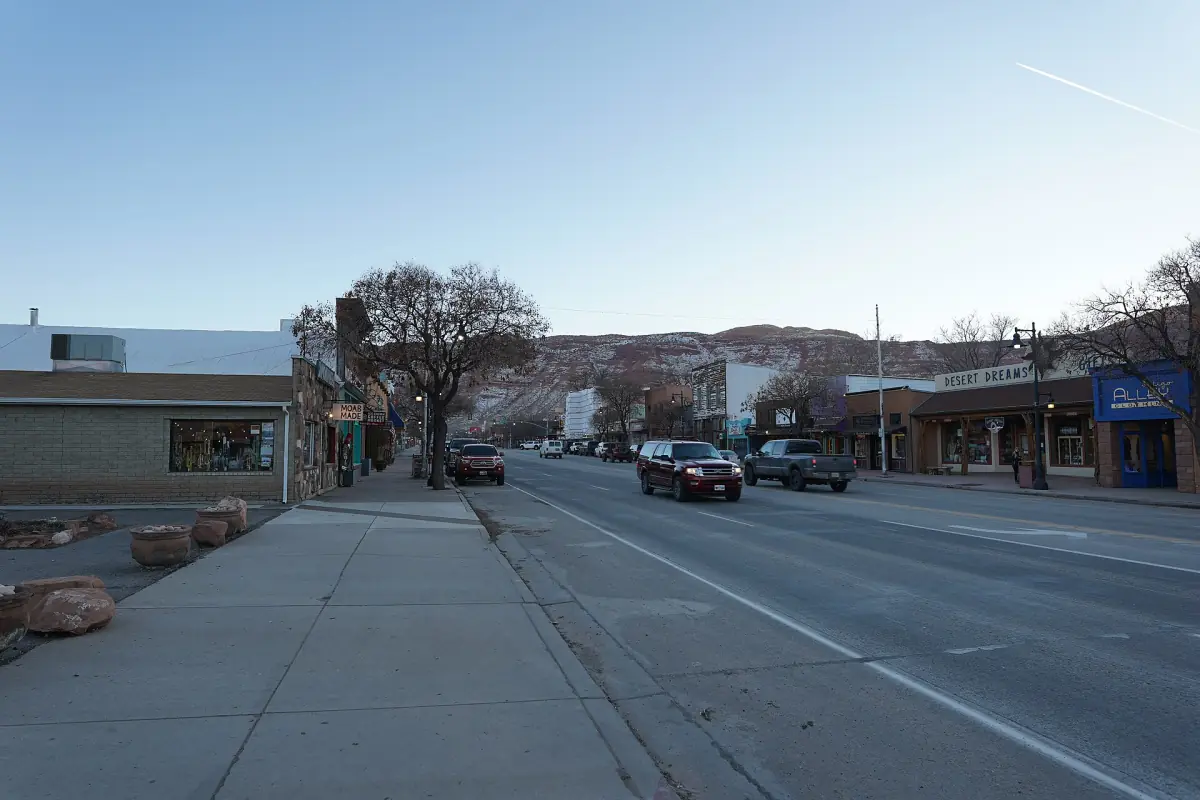
The local museum's development history records a telephone line and municipal water system in 1908. It places the first automobile in 1909, the first Colorado River bridge in 1912 and electrification in 1915. These milestones describe different parts of everyday infrastructure: communication, water, transport and power. Read them as a sequence of changes rather than as a single founding moment.
The bridge is a particularly useful point of reference when thinking about Moab and the Colorado River. Its date belongs to the town's transport history. The bridge photograph illustrating this page shows a crossing beneath layered canyon walls; it should be viewed as a landscape illustration rather than a dated photograph of the first bridge. A modern view and a historical milestone tell different kinds of story.
Keep the distinction in mind when exploring. A scenic road trip can prompt questions about how people moved through the region, but a view alone does not identify the age or former purpose of a structure. Let the recorded chronology supply the dates and enjoy the landscape without turning every visible feature into a historic stop.
Landscape and history outing
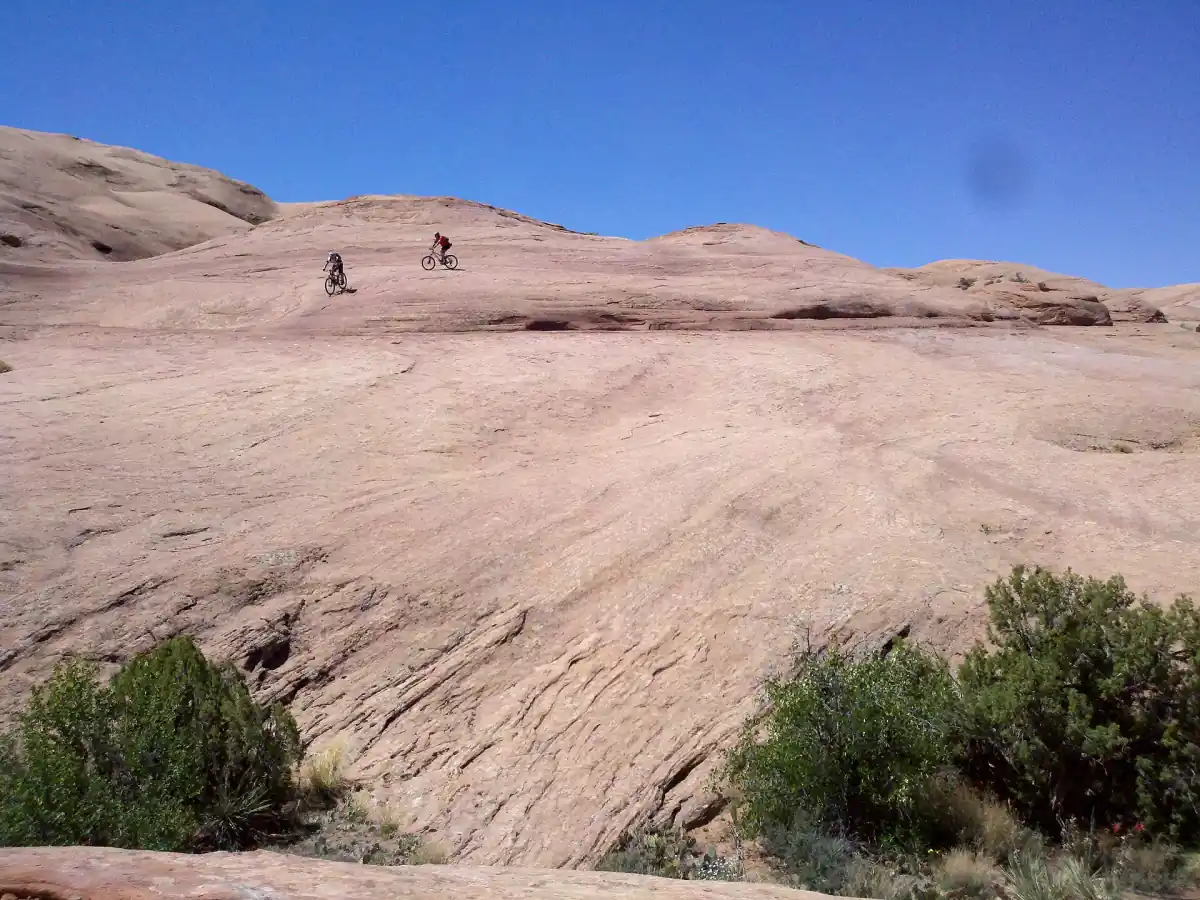
A private guide shares knowledge of local history and geology on this off-road outing.
Hand-picked tours, booked through GetYourGuide. Prices are indicative starting prices in US dollars (as of October 2026). Tap a tour for live availability and the current price in your currency.
Landscape, geology and local history with a guide
A private scenic Jeep outing combines an air-conditioned off-road vehicle with a guide whose expertise includes geology, history and local ecology.
The uranium boom and a changing economy
Charlie Steen's significant uranium discovery in 1952 brought a strong influx of people. The museum describes a shift from agriculture and ranching towards mining. This is a central part of Moab's modern story, because it links the town's economic life to resources beneath the surrounding landscape. It also adds another layer to a visit focused on red rock scenery.
In 1984 the uranium mill closed. Keep that event separate from the discovery and the boom: they mark different stages of the mining story. The closure is also a reason to avoid imagining the mill as an active part of today's economy. Historical dates help distinguish the landscape's industrial past from the activities a visitor can arrange now.
Neither milestone needs to become a mining itinerary. For a first visit, it is enough to understand the progression from an agricultural and ranching setting through the uranium boom, while leaving space for the town's other experiences. A landscape excursion with historical interpretation is a way to add context to your day.
Canyonlands and the shift towards park travel
The museum records the new town slogan “Heart of the Canyonlands” in 1963 and the establishment of Canyonlands National Park the following year. These dates sit before the mill closure, so park identity and the mining story should be read as overlapping parts of the chronology. They are not a simple overnight replacement of one industry by another.
Today, a visit to Canyonlands needs a practical choice of district. Island in the Sky, the Needles and the Maze have separate approaches; roads and bridges do not connect the districts inside the park. Understanding the park's place in Moab's history does not remove those geographical boundaries. Choose the area you want to see before planning the day's journey.
A private landscape outing with historical context
The private scenic Jeep experience lasts four hours and includes a guide, an air-conditioned off-road vehicle, bottled water and light refreshments. Guide expertise covers geology, history and local ecology, with flexible photo stops and trail pacing. Pickup is planned; arrange the precise address and time for your departure. Meals and gratuities are excluded.
Choose this outing for landscape interpretation and private guiding. Its historical content accompanies the scenery; plan museum visits separately rather than expecting museum admission or a fixed historical route. The Jeep tour guide also helps distinguish riding with a driver from guided self-driving experiences.
Questions about Moab's past
When was the first Colorado River bridge built?
The museum's account dates the first bridge to 1912, between the first automobile in 1909 and electrification in 1915.
What changed during the uranium boom?
Charlie Steen's 1952 discovery brought substantial inward migration, and the museum describes the shift from agriculture and ranching towards mining. The uranium mill later closed in 1984.
Is the featured outing a museum tour?
It is a private scenic Jeep experience with guiding that includes history, geology and local ecology. Its focus is the landscape, with photo stops and refreshments.